
01 / Interview
Alexander Lervik – the designer who starts with the question
Chapter 01
He has made a lamp from his own brain, another from chocolate, transformed a lift into a piece of furniture, and persuaded some of the world’s leading photographers to interpret his chairs. But for Alexander Lervik, design has never primarily been about creating beautiful objects. After nearly three decades as a designer, the driving force remains the same: finding the idea that makes us see an everyday object in a new way.
There is a fairly effective way to understand Alexander Lervik’s career. You can, of course, list the furniture, the lamps, the exhibitions, the museums and the awards. But you can also begin with a stool.
The year is 1998, and Lervik is about to graduate from the Design Programme at Beckmans in Stockholm. Around him are hundreds of other graduating students who also want to be discovered. So the question he asks himself is not simply what he should design.
It is: How do I make myself stand out among all the graduating students from Sweden’s design schools?
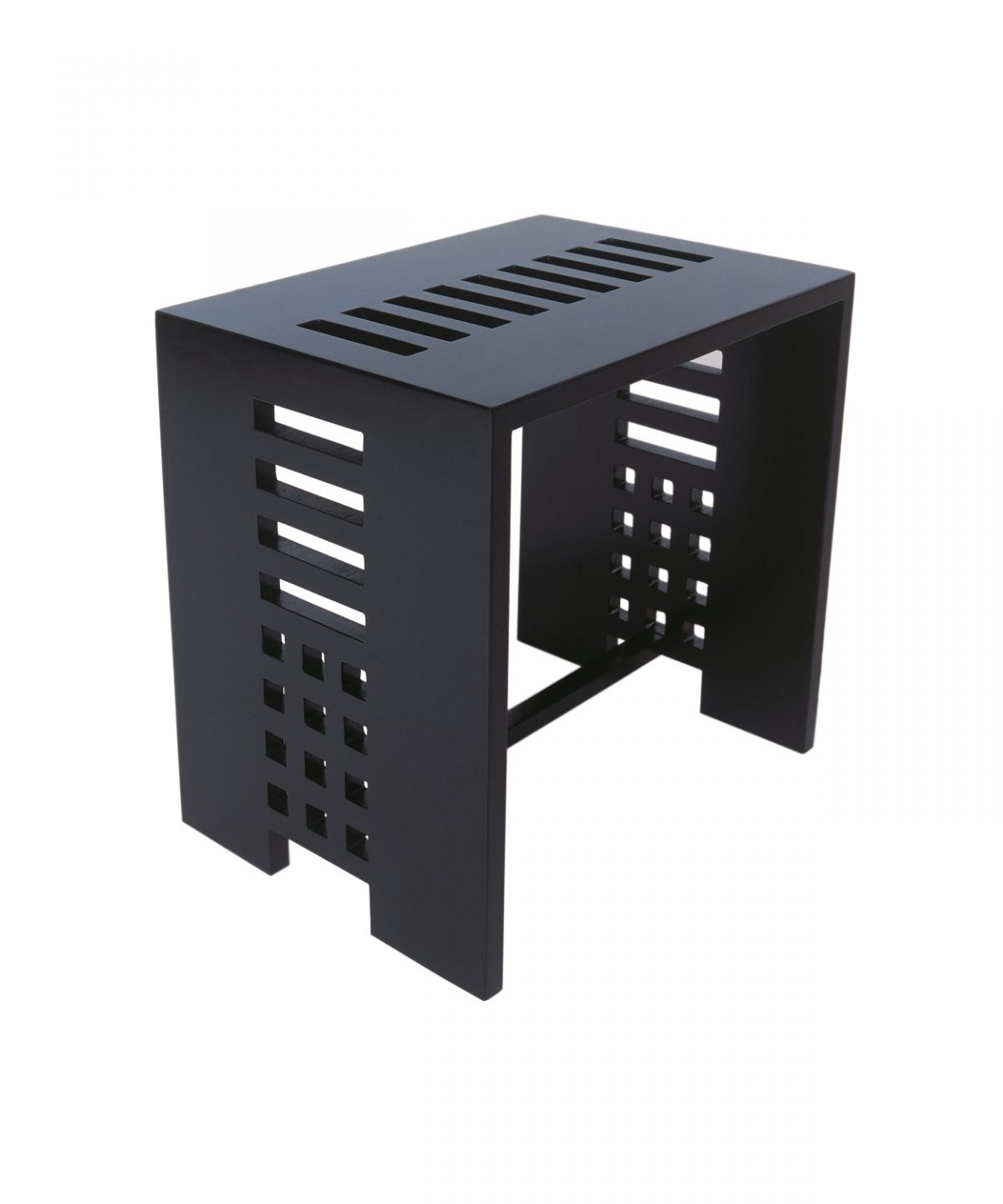
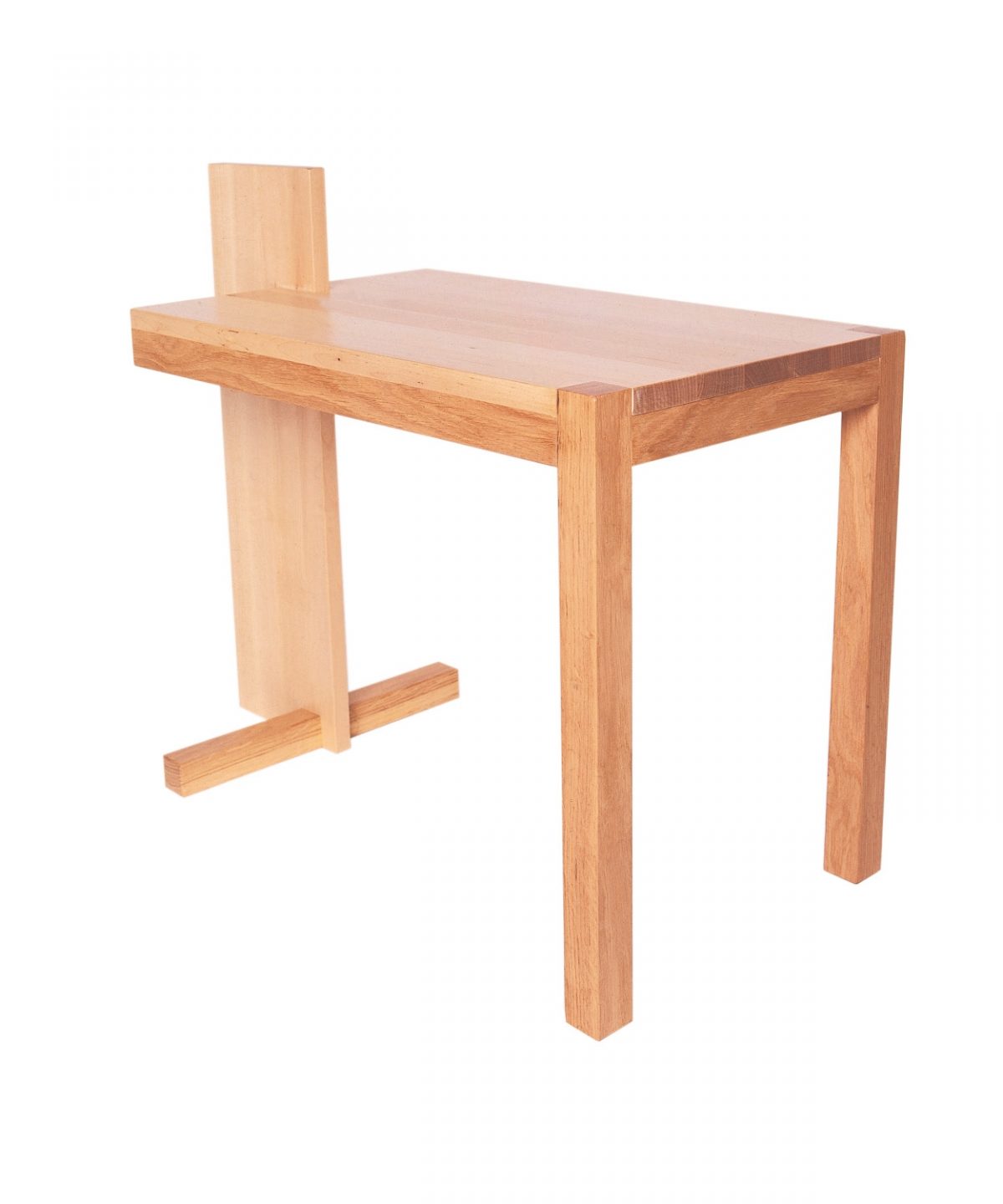
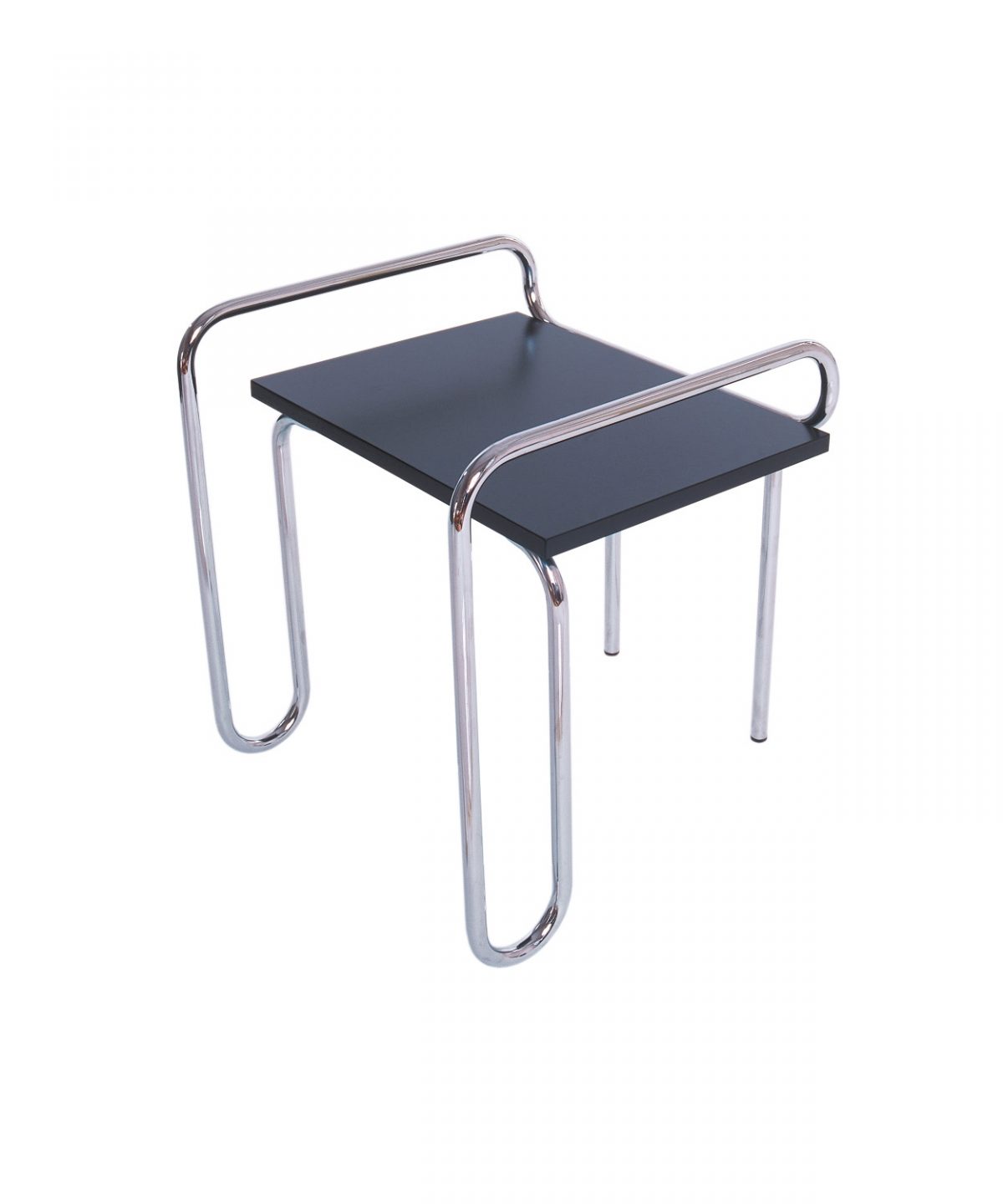
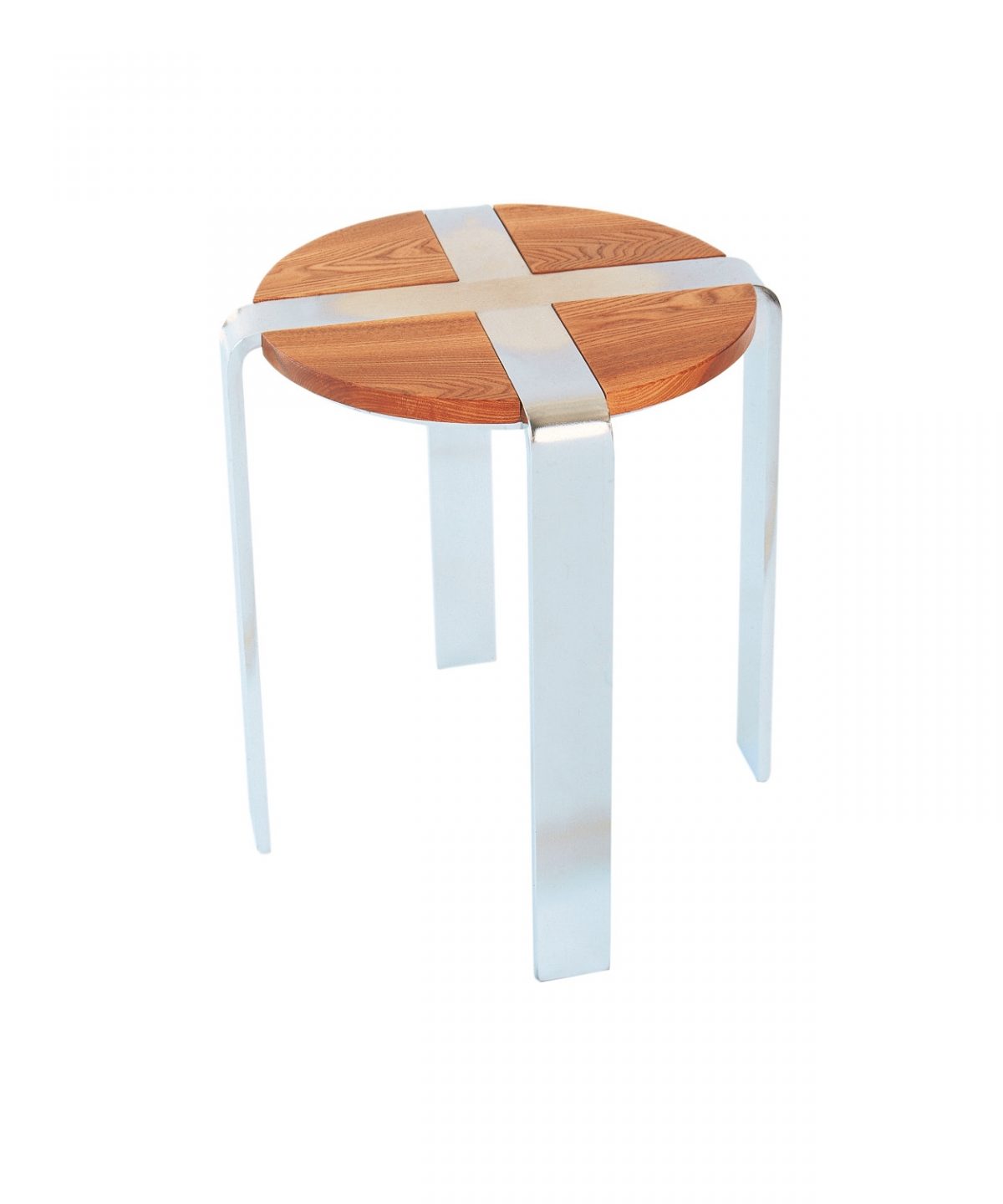
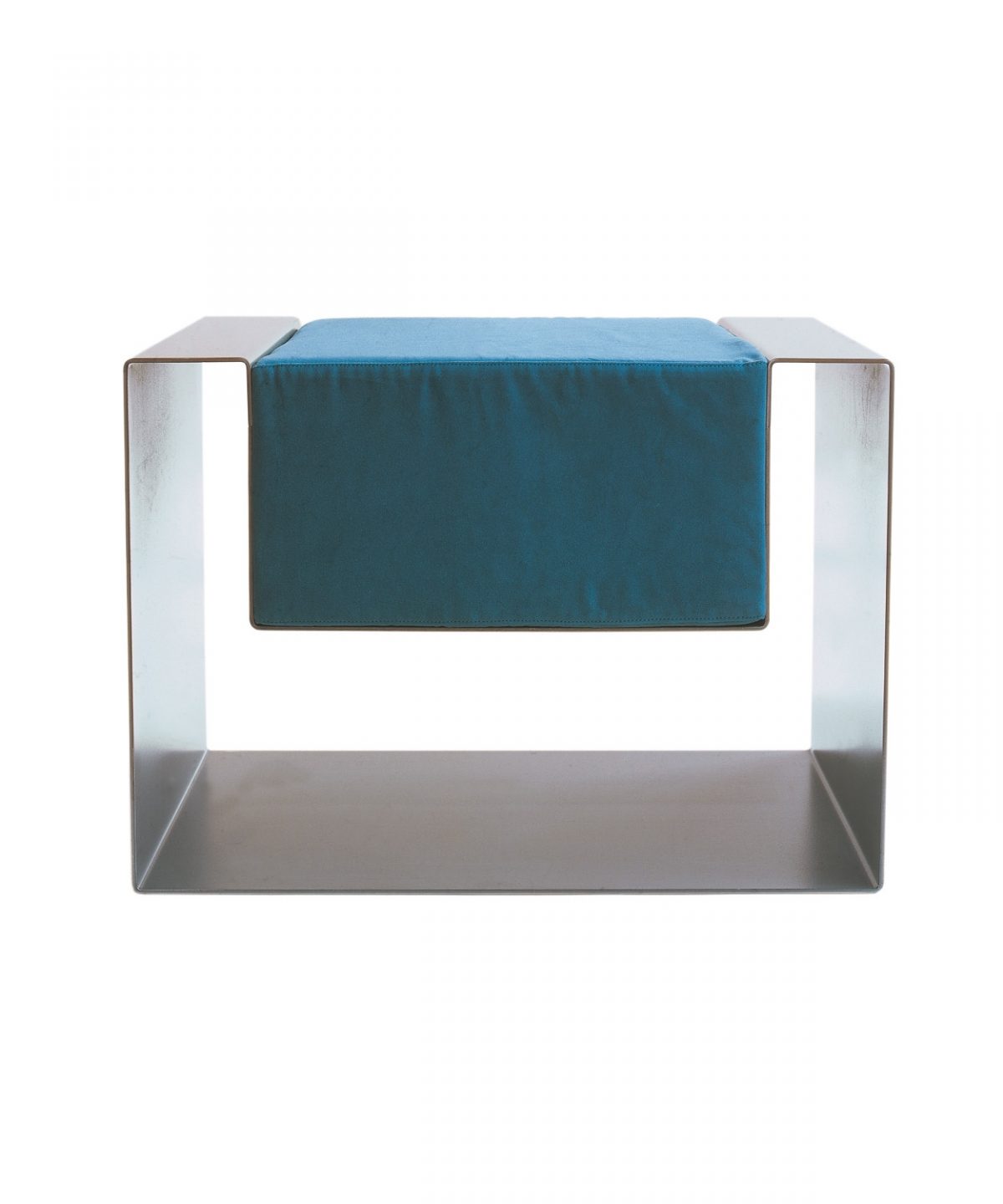
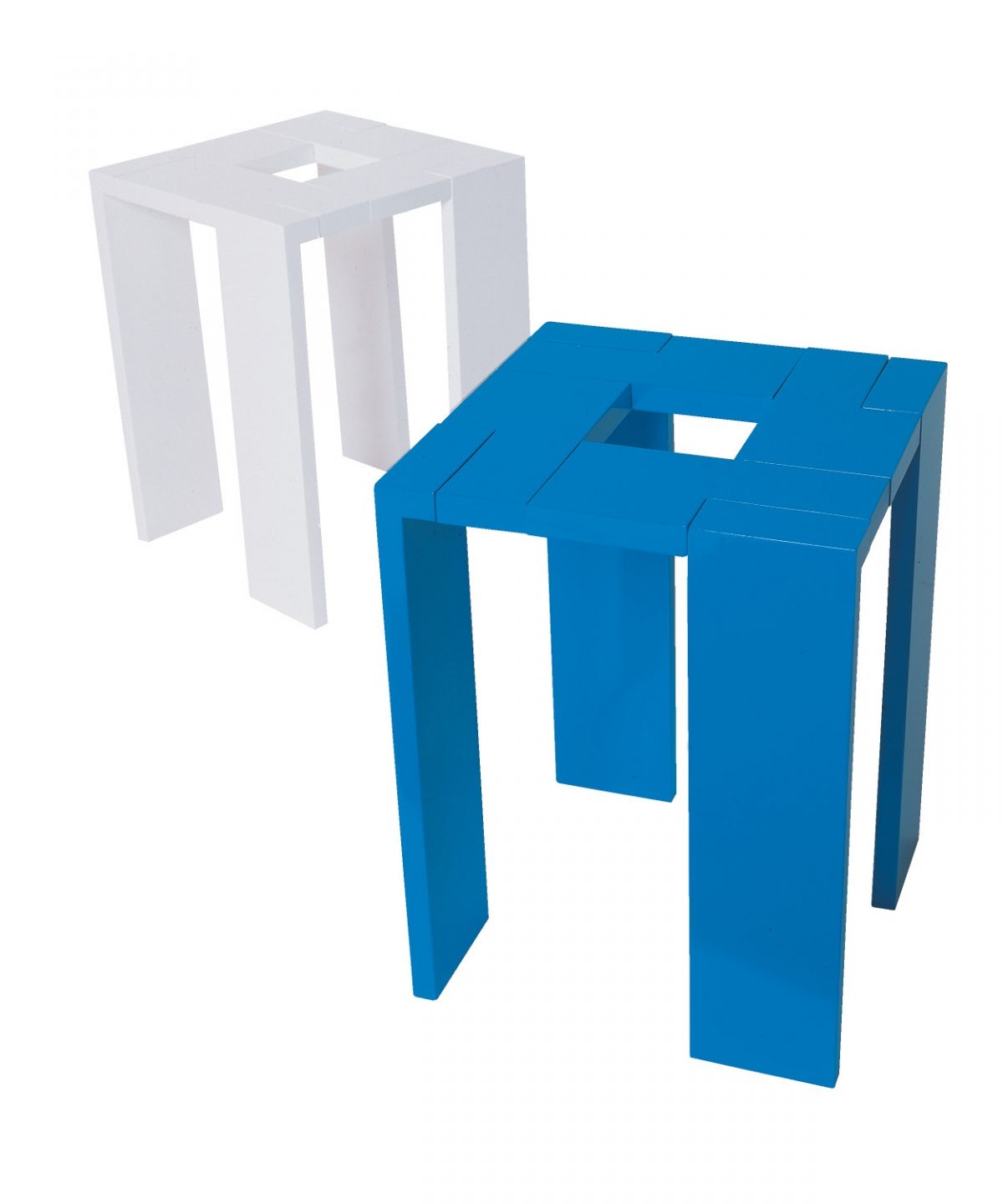
The answer becomes his graduation project, 10 Stools 10 Decades, in which he interprets the design history of the 20th century through ten stools.
– I don’t think I understood at the time just how decisive that project would become. I was thinking very pragmatically: how do I create a story that makes my graduation project stand apart from everything else?
The exhibition began to take on a life of its own. It toured internationally for several years and was seen by more than a million people. But for the young designer, perhaps the strongest recognition came in a considerably smaller format: a letter from Rolf Fehlbaum, then owner of Vitra, congratulating him on his graduation project.
It is an almost improbably perfect opening scene to a career. But above all, the project established a way of working that can still be recognised in Lervik almost three decades later.
He rarely starts with the form.
He starts with the question.
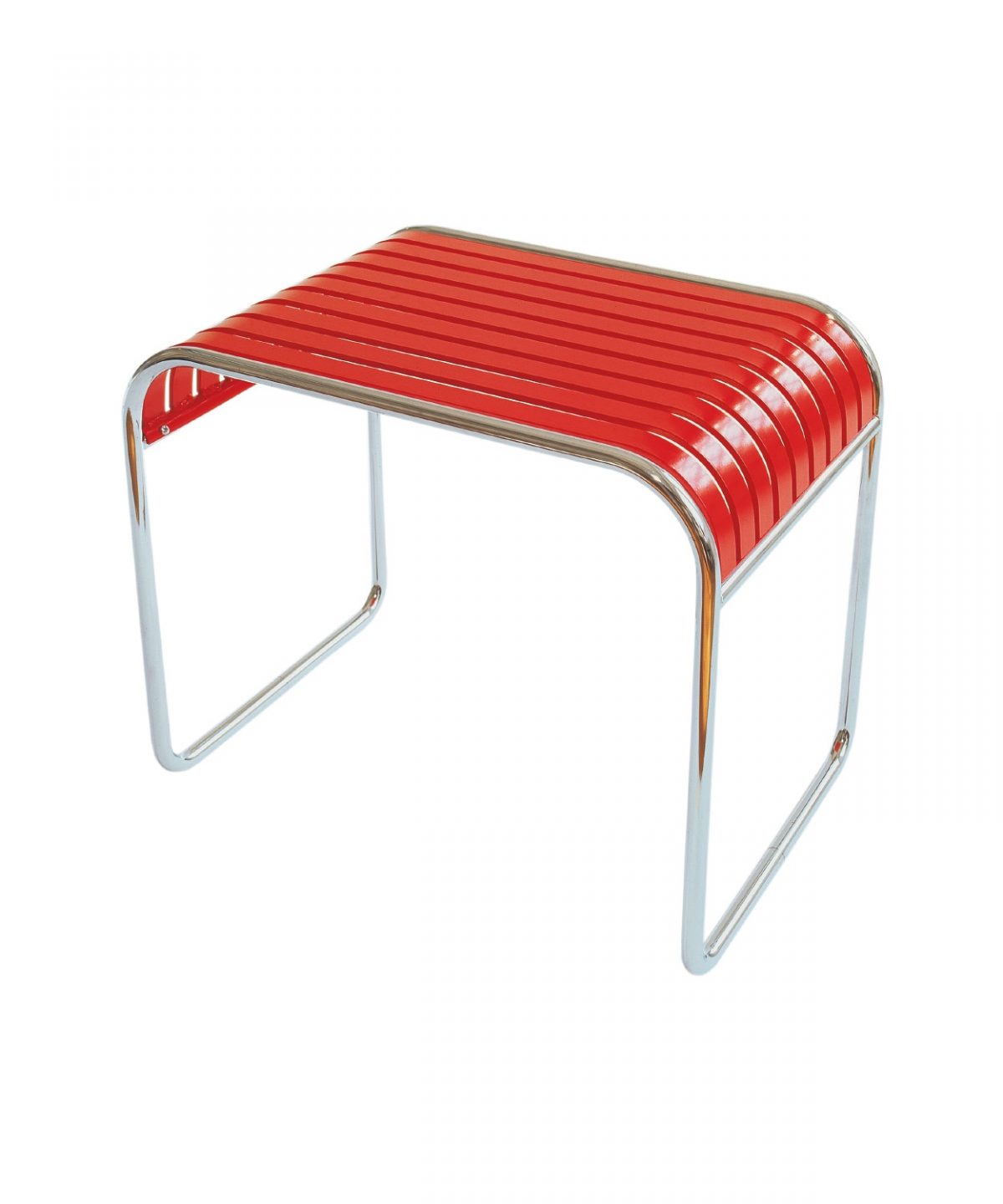
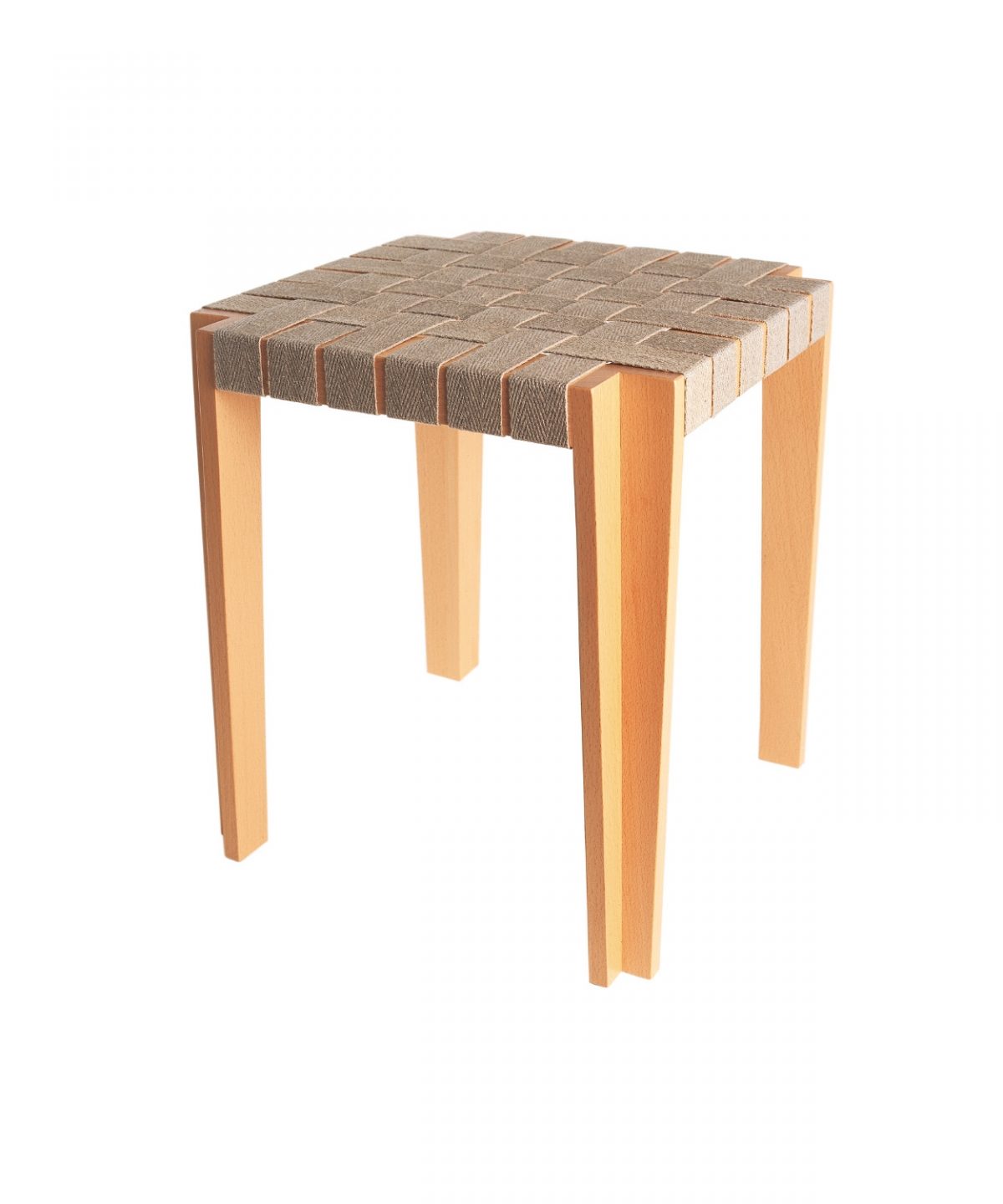
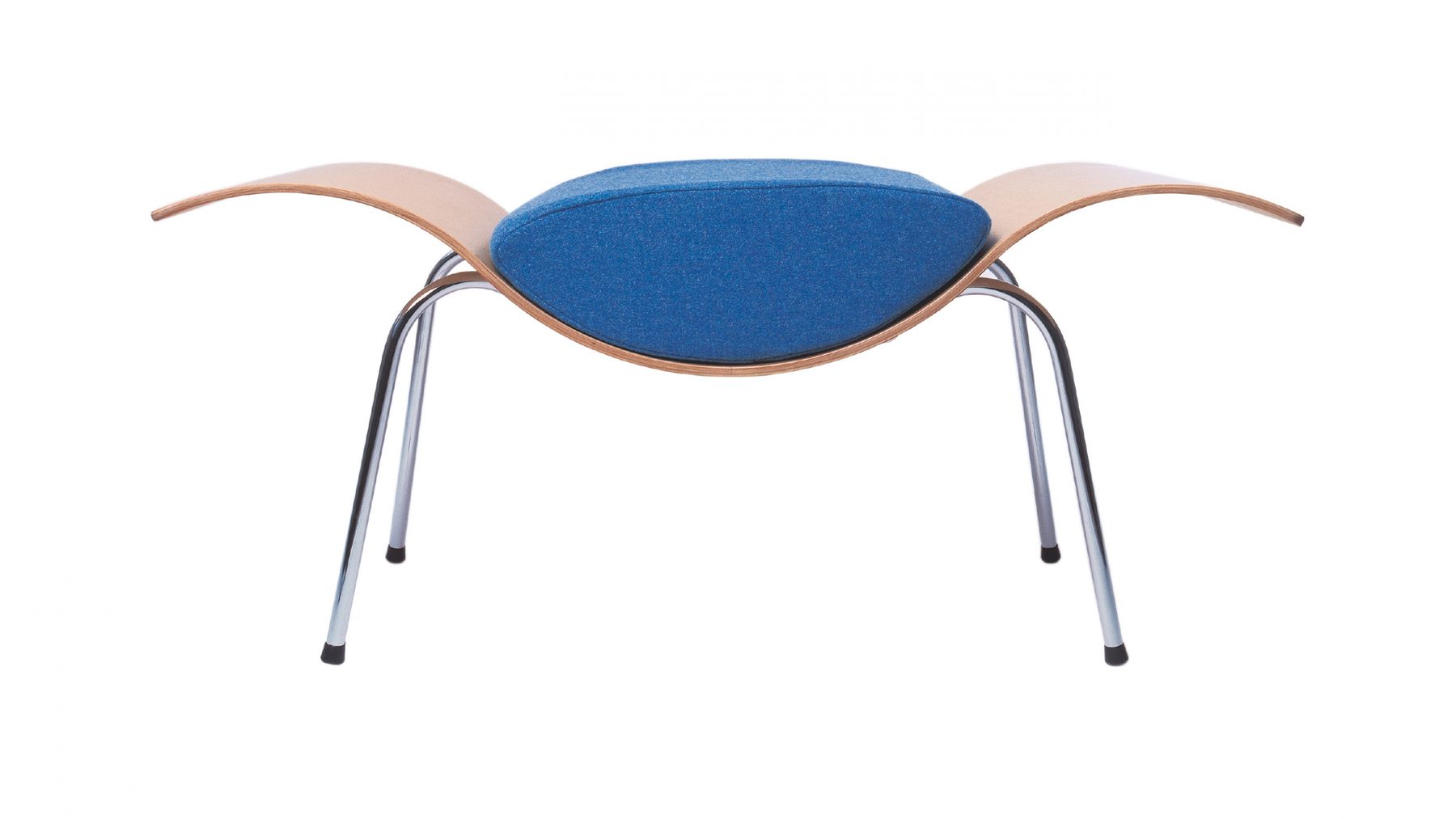
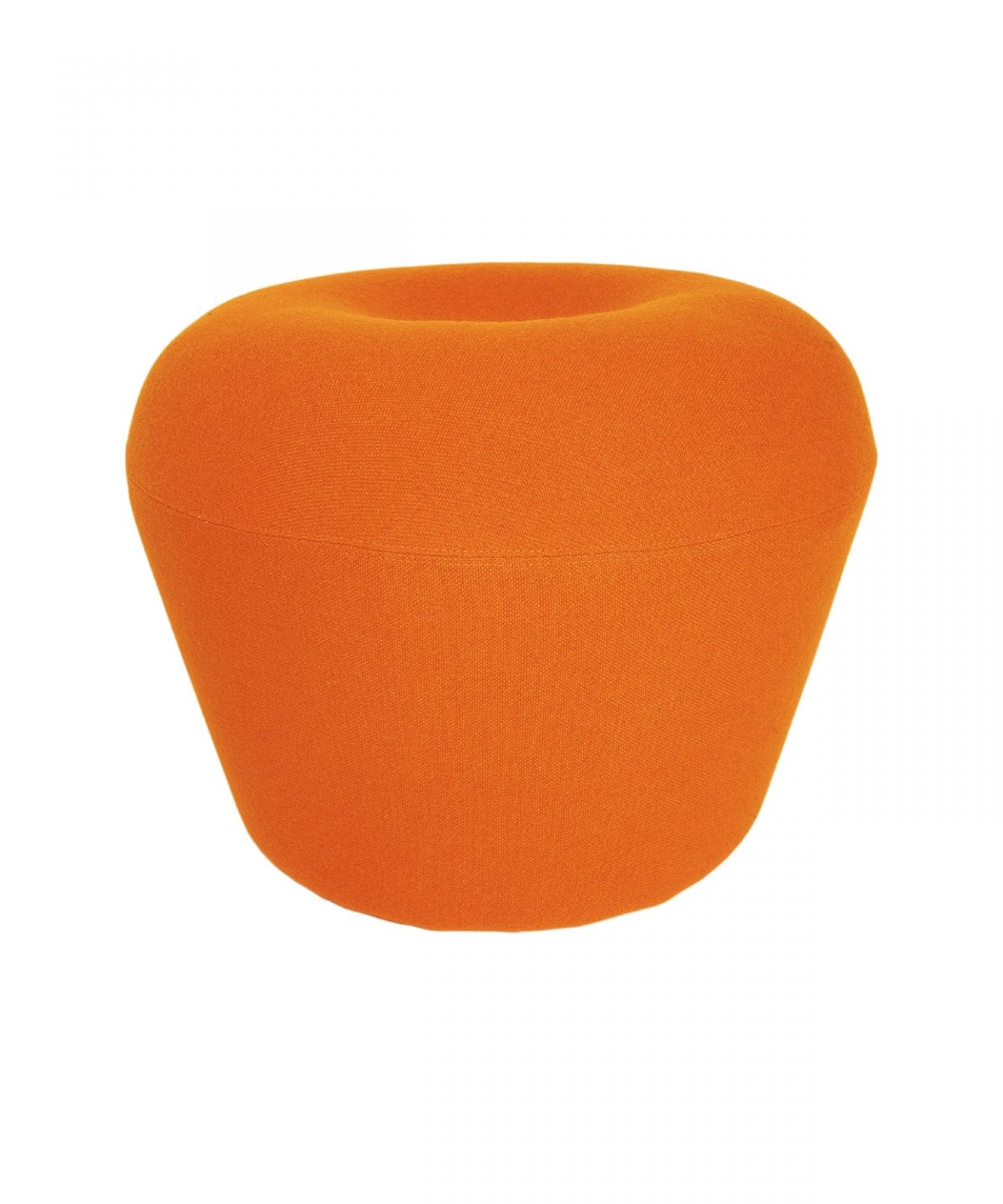
Chapter 02
Not having a style can be a style
The design world loves recognisability. A successful designer is often expected to develop a visual language that allows the viewer to identify the creator from several metres away.
Alexander Lervik has gone in the opposite direction.
– I have never been particularly interested in people looking at an object and saying, “That must be a Lervik.” I almost think that would be limiting. For me, the idea is more important than a consistent aesthetic.
That explains why his portfolio can feel as though it has been created by several different designers. It includes rational contract furniture, experimental light objects, industrial products, art glass, chairs, technical innovations and collectible design.
But look more closely and there is still a very clear DNA.
Not in what the objects look like – but in how they came about.
Lervik searches for the unexpected mechanism, material or story that can transform a familiar object. The projects often begin with almost childishly simple questions.
Can a door handle communicate?
Can you make a lamp that creates darkness?
Can a lift be experienced as a piece of furniture?
Can you make a lamp from your own brain?
These are questions that sound more like the beginning of experiments than industrial design briefs. And that is precisely where much of his work begins.
Chapter 03
A door handle that speaks
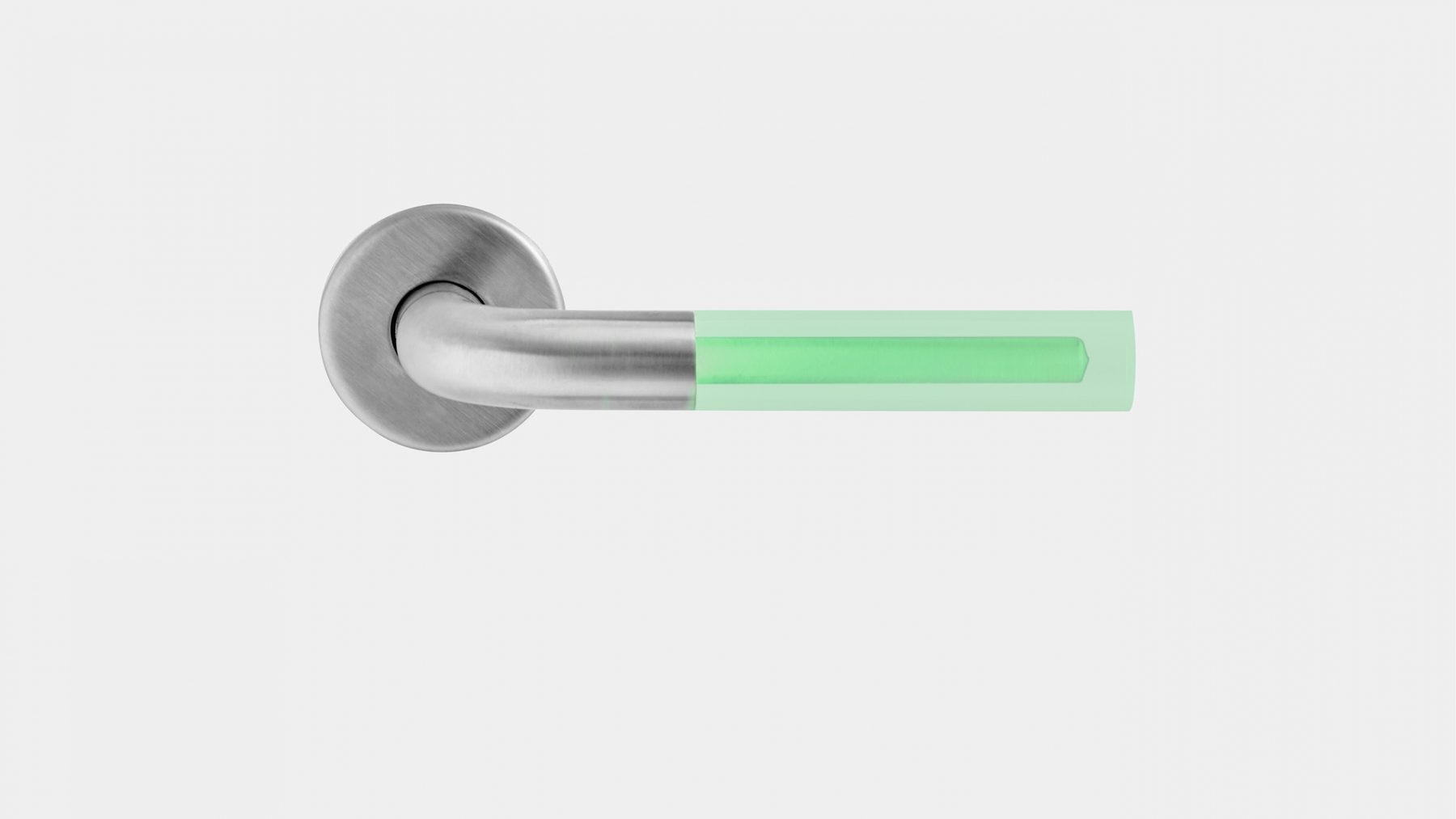
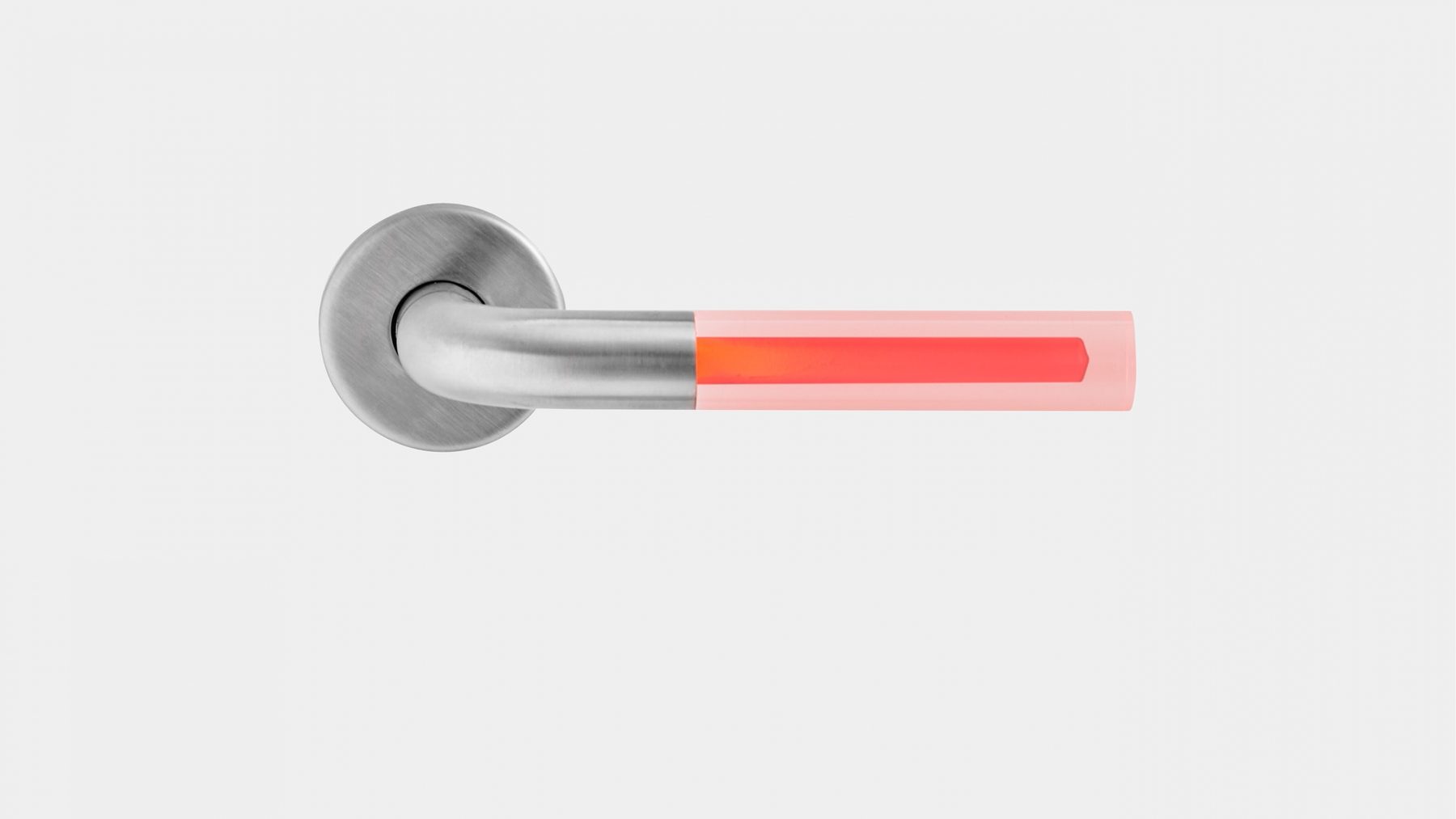
In 2001, Lervik presented Bright Handle in Milan. The idea emerged from the meeting of two familiar systems: the traffic light and the “do not disturb” sign on a hotel-room door.
The result was a door handle that, using red and green LED light, could communicate whether a room was occupied or available.
Today, when almost every product around us communicates digitally, the idea may seem obvious. At the time, it was something entirely different.
Bright Handle gained international attention and was published in media in more than 100 countries around the world.
It also marked the beginning of something that would recur throughout Lervik’s career: light as a material.
– I have always been fascinated by light because it can change an object without the object itself actually changing. It can communicate, create an illusion or give a material an entirely different quality.
In 2007, this exploration culminated in the exhibition Enlightenment at the Röhsska Museum in Gothenburg. There, he presented 18 objects built around LED technology, at a time when the technology had only just begun to become practically usable as a light source in design. The exhibition also helped establish him as a light artist.
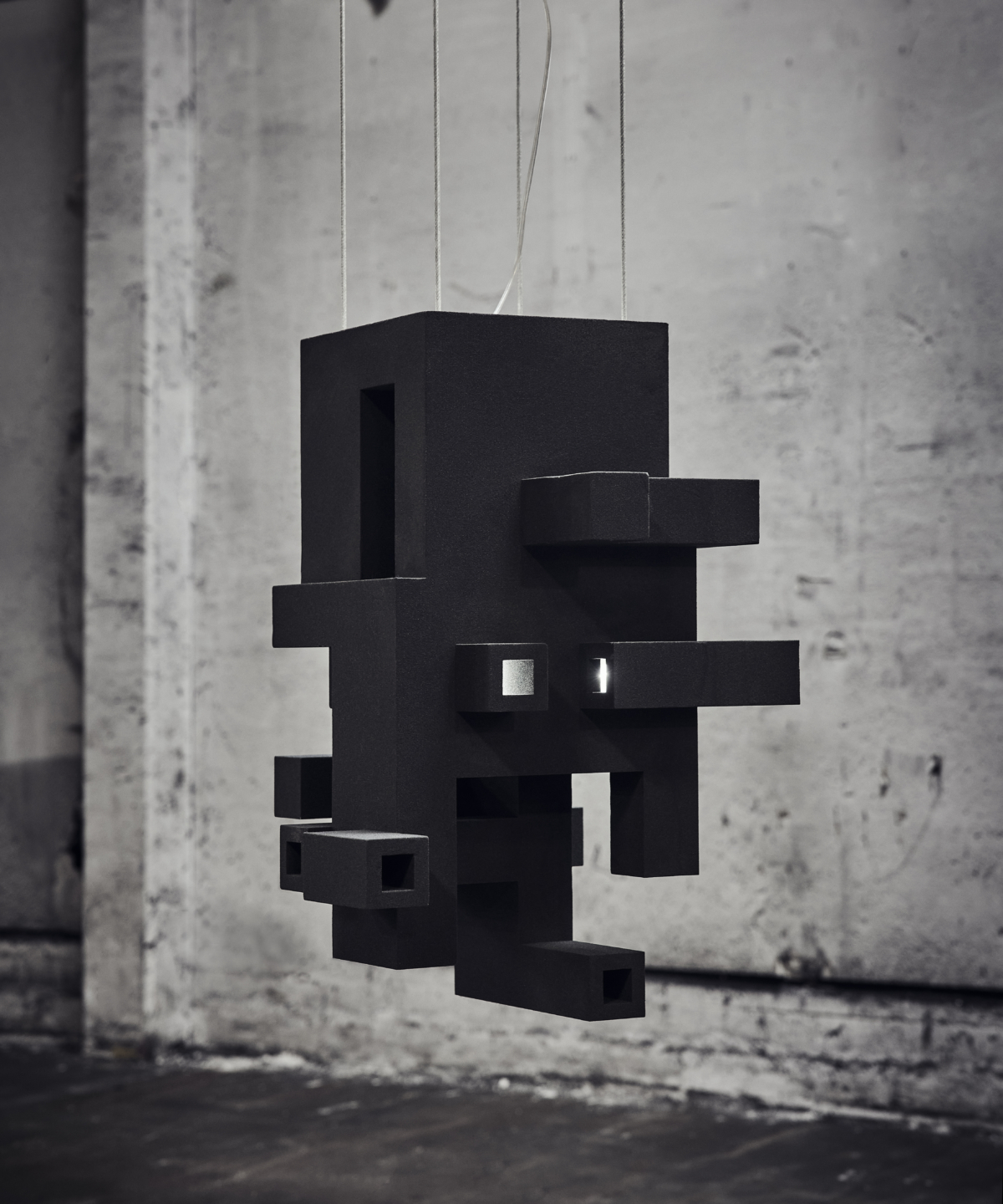
A television feature about the exhibition later led to an unexpected phone call from Skandia. The commission became a monumental light artwork for the company’s headquarters: a three-by-three-by-three-metre cube in which 1,740 heads represented the employees and were illuminated with LED.
The idea was based on technology Lervik had previously used in a dance floor for a nightclub.
It says something about his method. Knowledge from one project is rarely archived and forgotten. It reappears somewhere completely different.
A dance floor can become an artwork at an insurance company.
Chapter 04
The lamp that eats itself
In 2013, Lervik asked another strange question:
Can you make a lamp that does not give light?
The answer became La Lumière au Chocolat – the chocolate lamp.
When the lamp is switched on, a shade made of chocolate is slowly heated. The material begins to melt and the light is gradually released. The dark volume transforms into a source of light at the same time as the lampshade itself disappears. The chocolate is then collected and can be eaten.
It is design as product, performance and joke all at once.
The film showing the process quickly spread internationally.
– I like it when an object has a before and an after. When something happens. Then the user becomes part of the story.
Here, too, lies an important key to Lervik’s work. For him, innovation does not necessarily mean advanced engineering. Sometimes it is enough to combine two worlds that normally have nothing to do with one another.
Like light and chocolate.
Chapter 05
Literally designing his own head
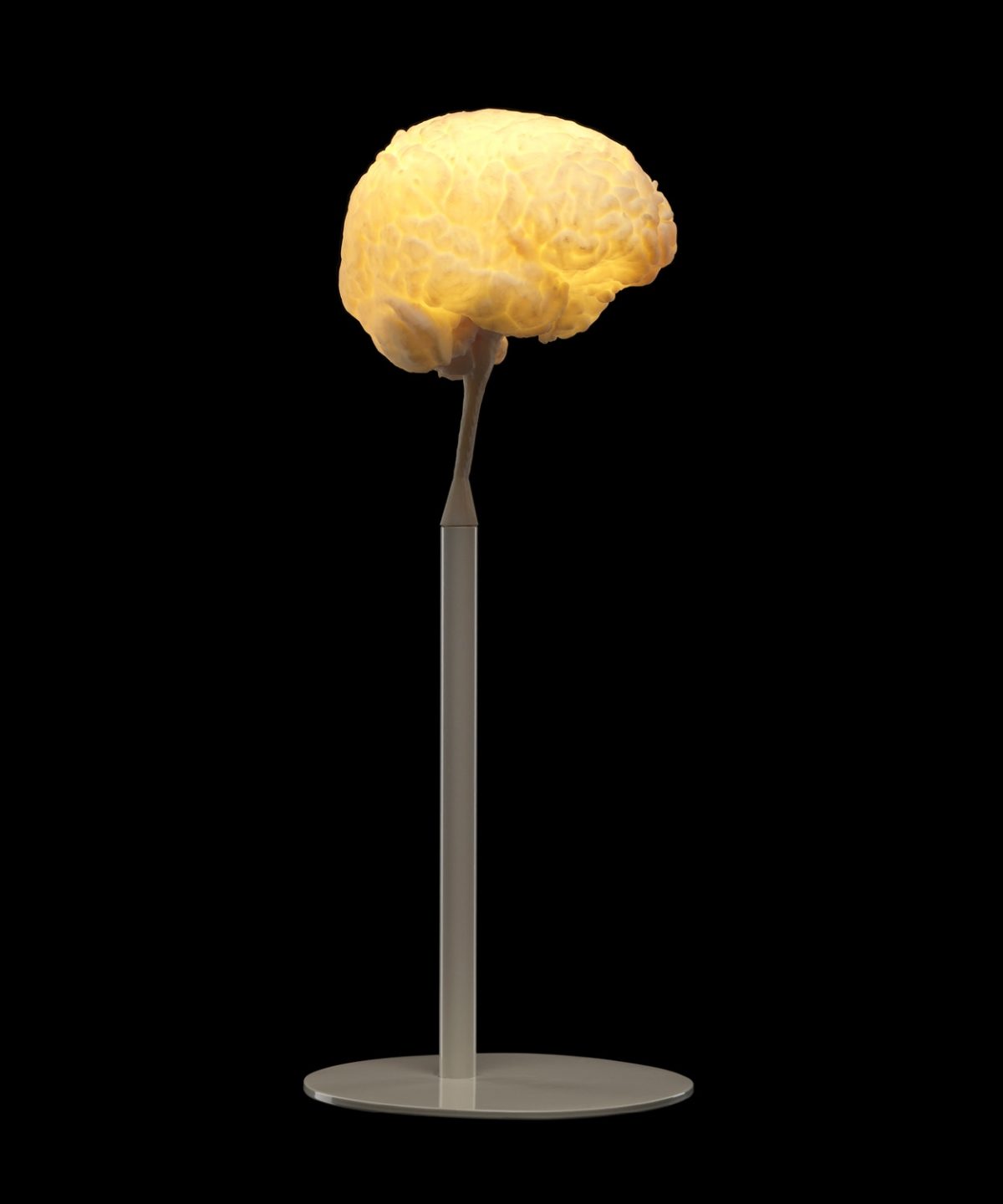
If there is one object that has become synonymous with Alexander Lervik’s more experimental side, it is MYBrain, or the Brain Lamp.
The idea began during a trip to Asia, when he saw an image of a human brain and became fascinated by its form.
– I thought all the folds would look fantastic if you could illuminate them from within. Then came the next thought: if I am going to make a brain anyway, why not make my own?
He had his brain MRI-scanned at Karolinska Institutet. Hundreds of sectional images were converted into a three-dimensional digital model, which could then be 3D-printed and illuminated from within.
Today, 3D printing is commonplace in design studios. When the project was created, the technology was still exotic. Bukowskis has subsequently described the Brain Lamp as the first signature object for 3D-printing technology in Scandinavia.
But perhaps the most interesting thing about the object is not the technology.
It is how literally personal it is.
Designers often talk about putting a part of themselves into their work. Lervik did it anatomically.
Chapter 06
Curiosity before prestige
There is another characteristic that keeps reappearing when you follow Lervik’s career: an almost systematic unwillingness to accept boundaries between disciplines.
When, fifteen years after his graduation project, he wanted to create a follow-up, he decided not to design anything himself.
Instead, others would interpret his work.
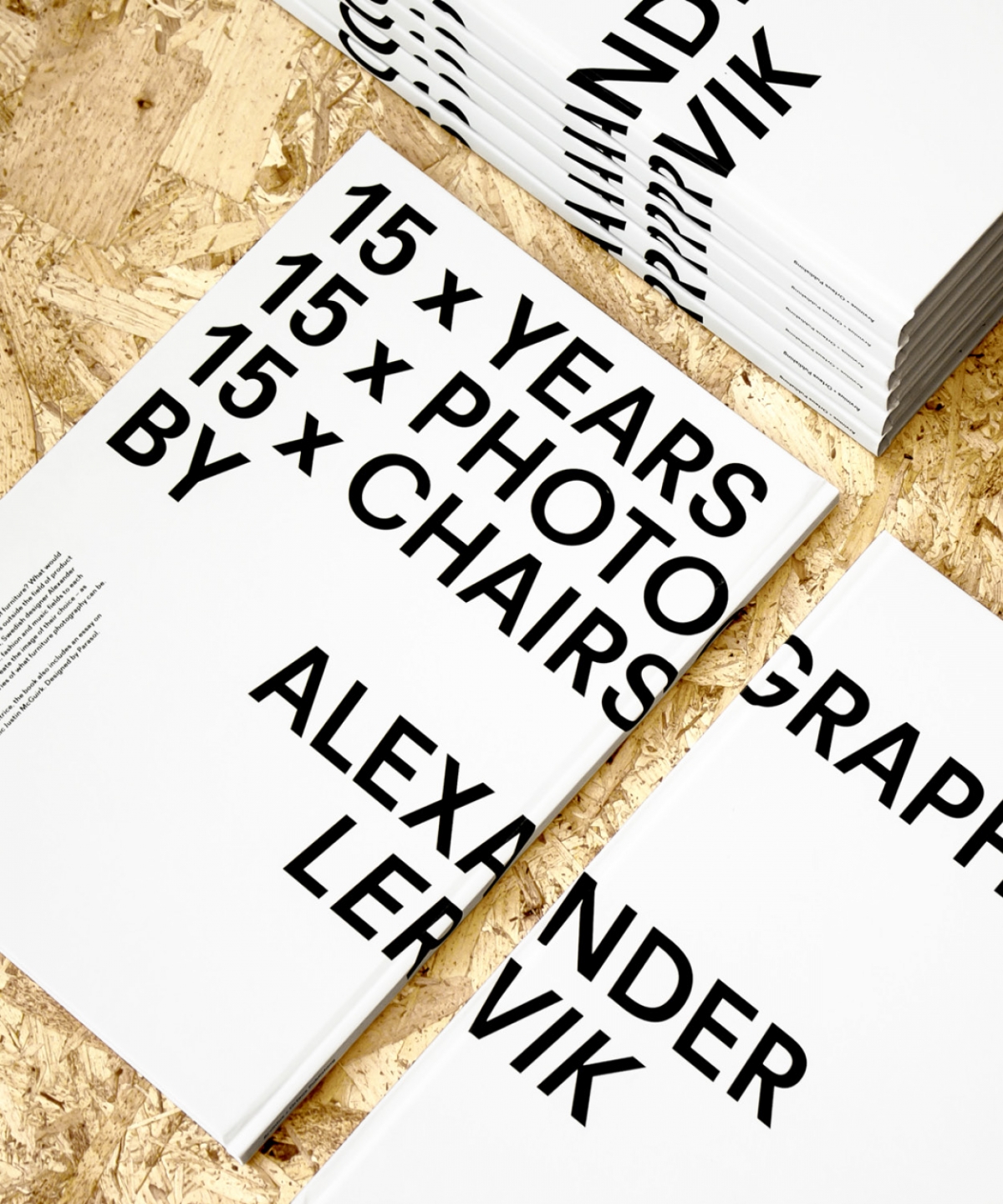
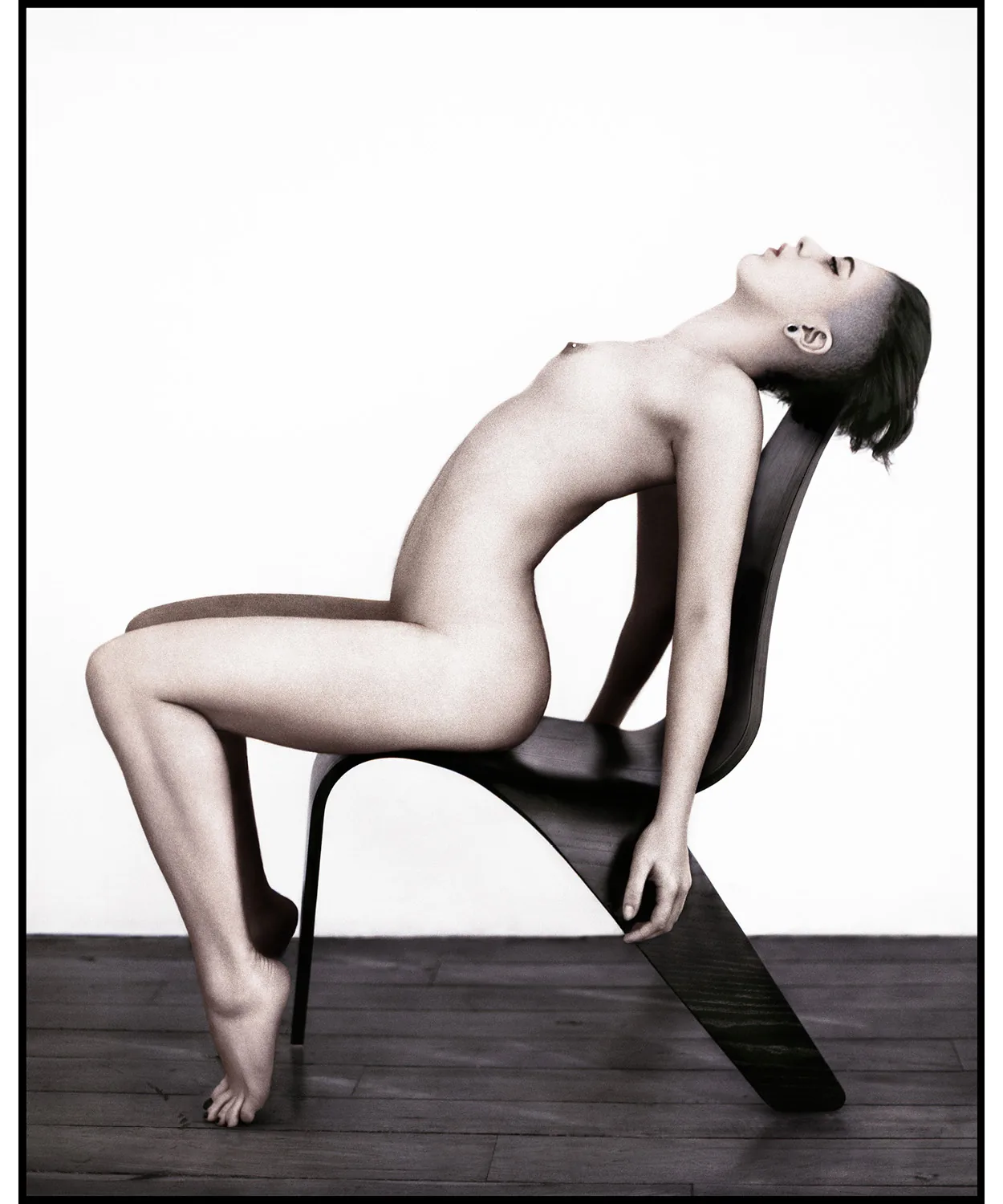
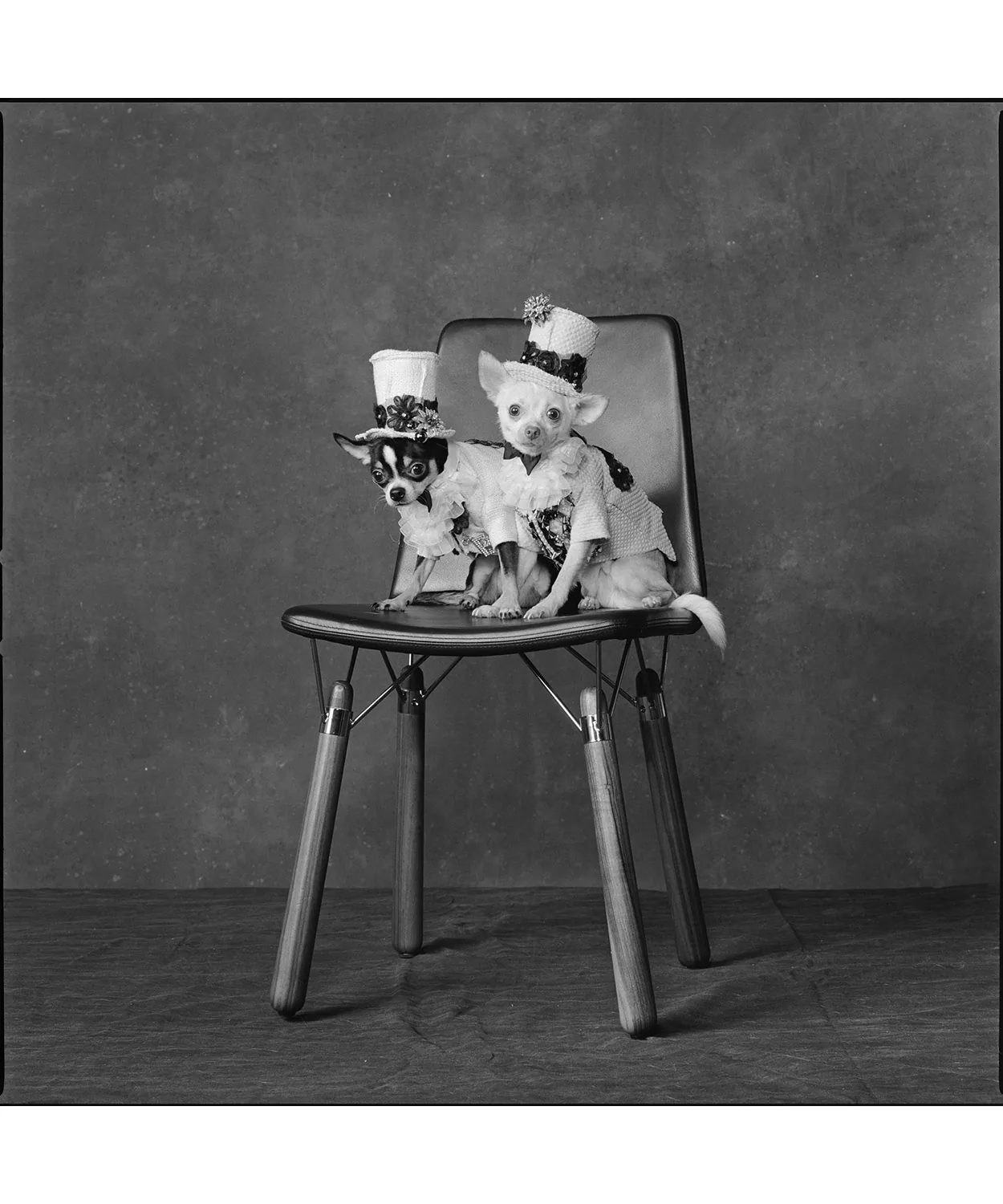
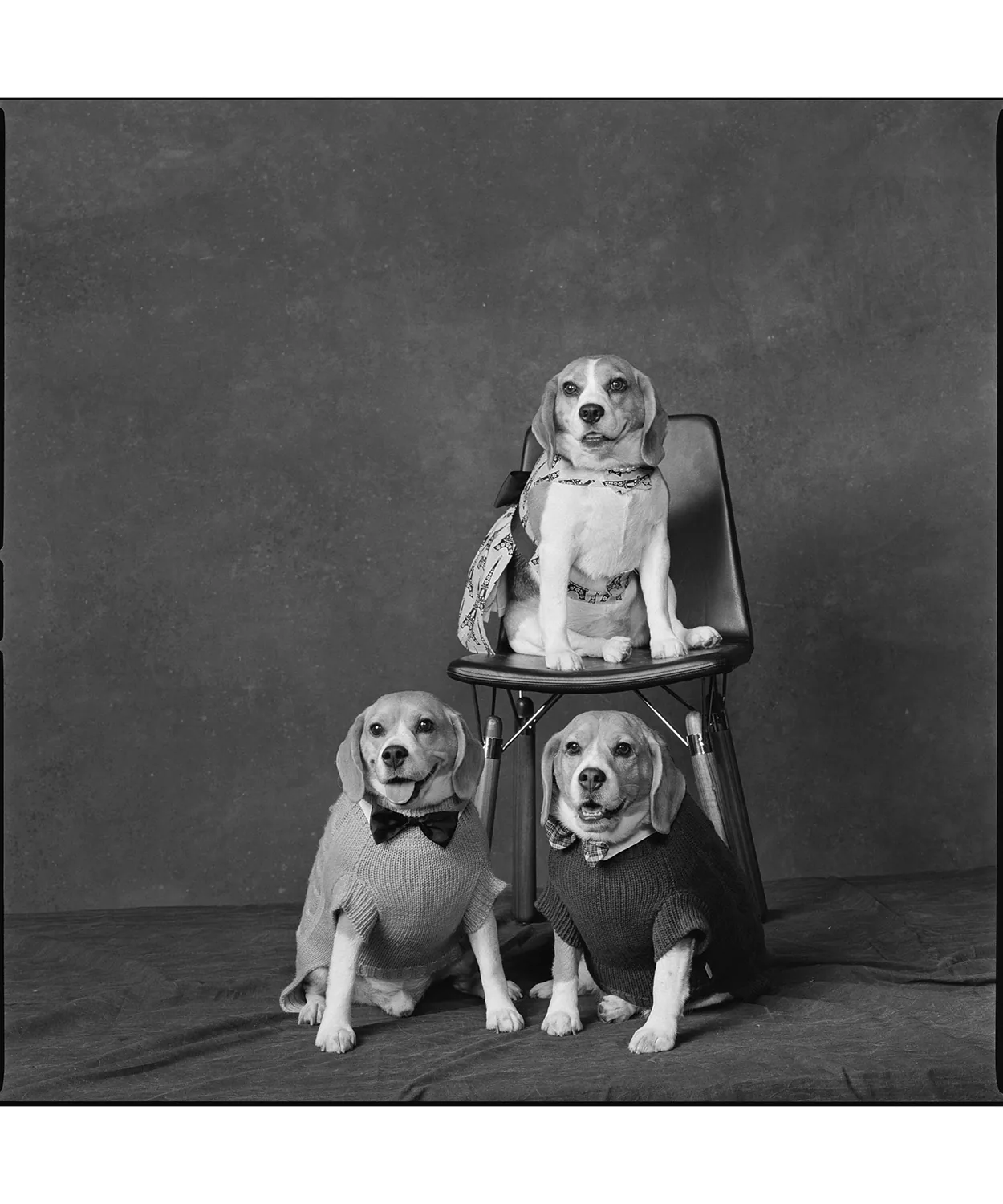
The project became 15 Chairs 15 Photographers. Lervik first contacted some of Sweden’s leading photographers. When they said yes, he continued internationally.
The instruction was simple: choose one of my chairs and do whatever you want with it.
The resulting project included photographers such as Mary Ellen Mark, Martin Parr, Lynn Goldsmith, Vee Speers, Dawid, Gunnar Smoliansky and Annika von Hausswolff.
– I think one of my greatest strengths is that I am not particularly afraid of asking people. What is the worst that can happen? They say no?
It sounds banal. But in a creative career, it is almost a philosophy.
The same attitude led to collaborations far beyond the traditional furniture world. With the fashion label Fifth Avenue Shoe Repair, he developed 3D-printed jewellery for the catwalk. When he later had the idea of working with music and glass, he simply wrote to Eva Dahlgren.
She replied.
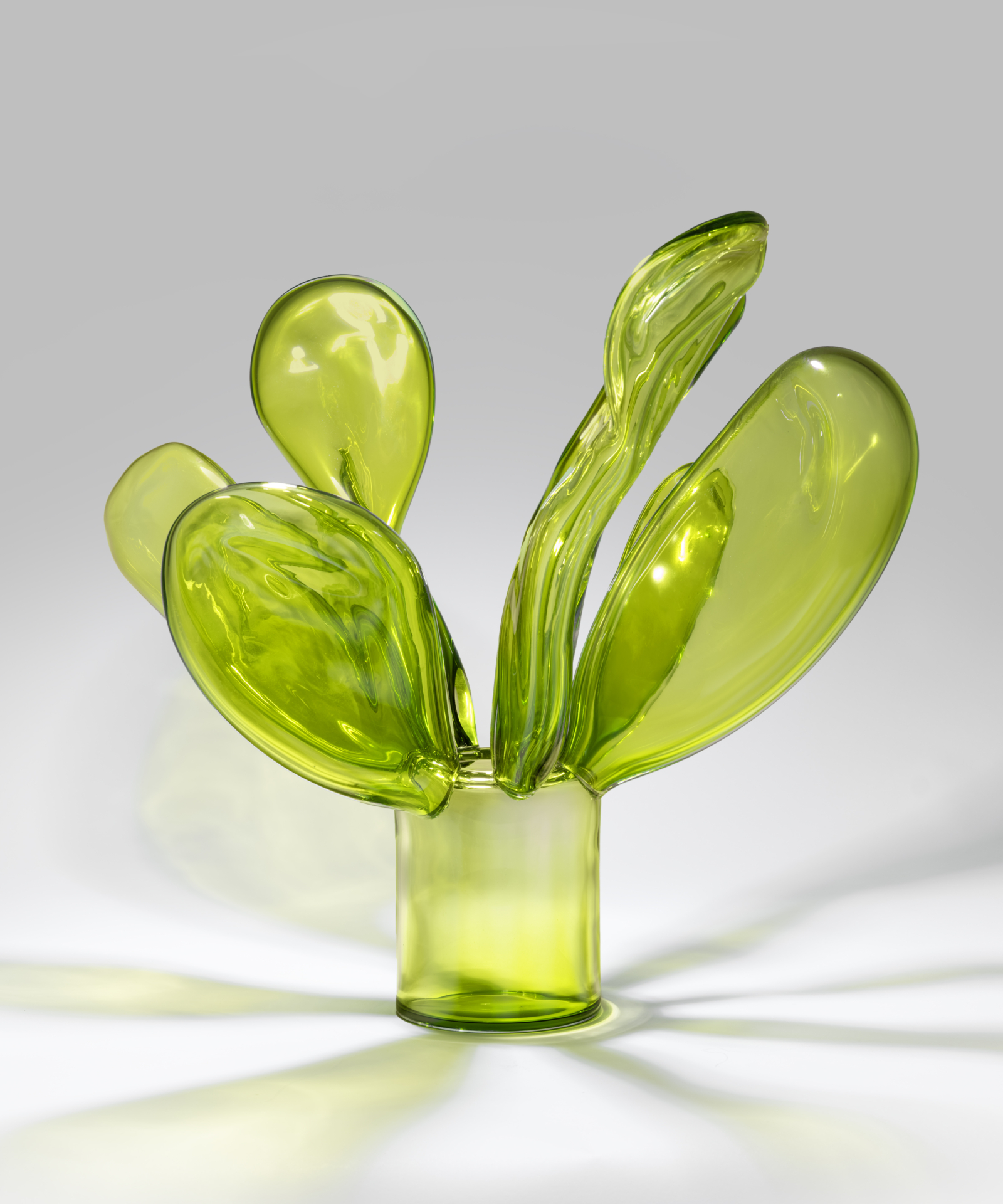
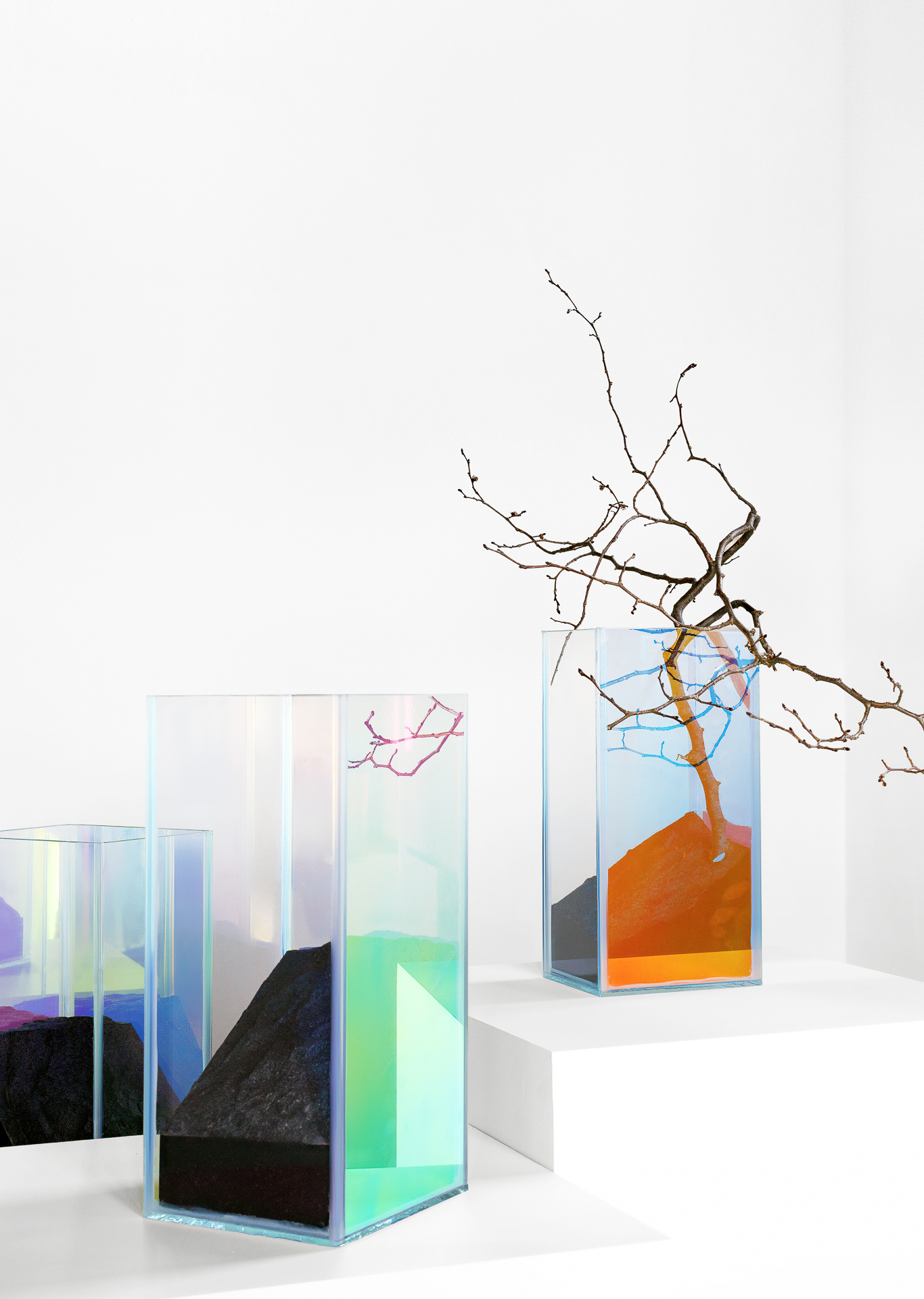
The collaboration grew into an art project in which Dahlgren specially composed a piece of music that they jointly translated into five glass installations, produced together with Målerås Glassworks.
Once again, it is the same method.
An idea. A question. A phone call or a letter.
And then you see what happens.
Chapter 07
When a lift becomes a piece of furniture
At the same time, it is easy to get the wrong impression of Alexander Lervik if you look only at the spectacular objects. Because alongside brains, chocolate and light installations, there is an extensive body of industrial work.
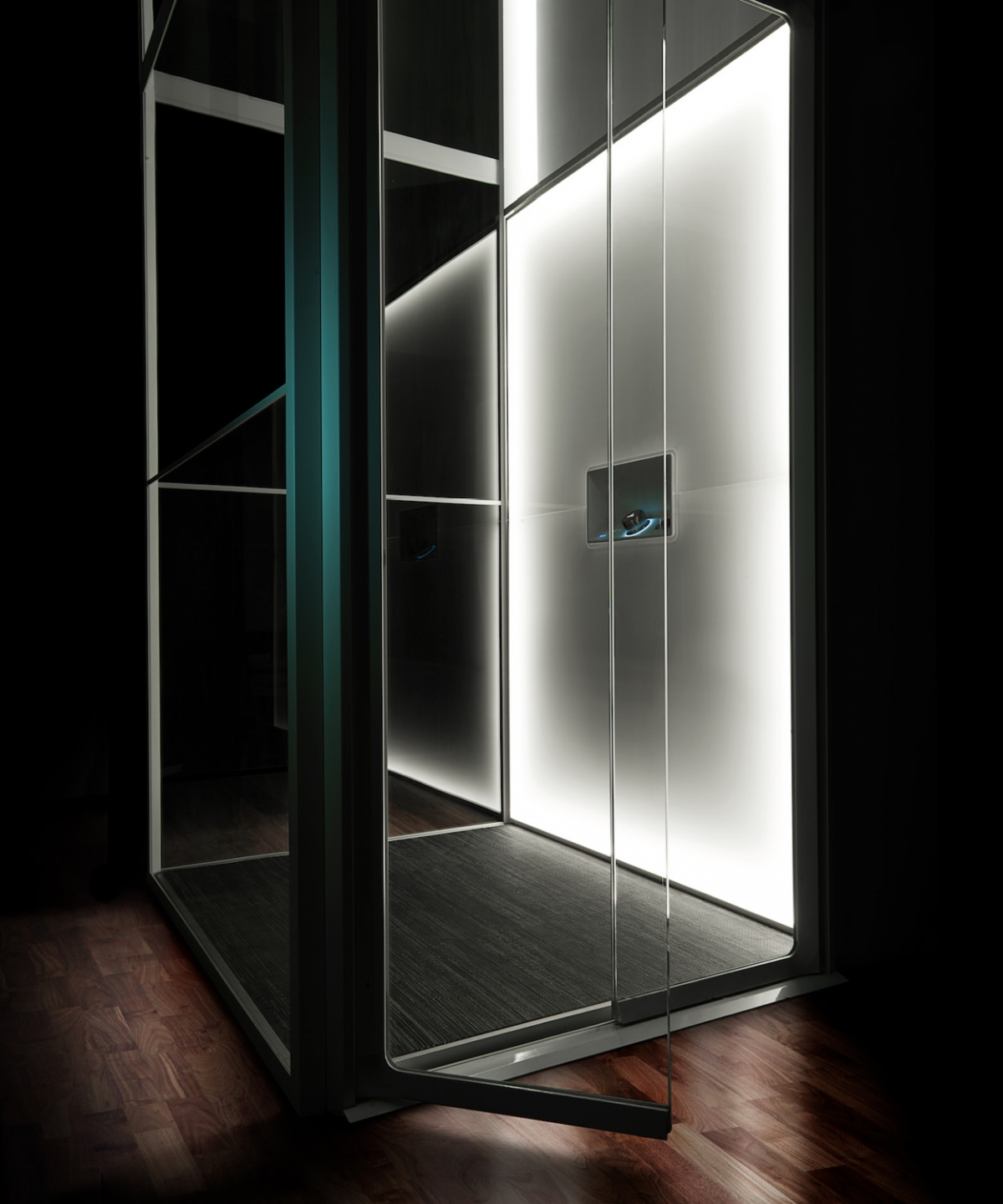
One of the clearest examples is his collaboration with lift manufacturer Aritco, which began in 2013.
The commission was unusually phrased: develop a lift as if it were a piece of furniture.
– I liked the brief immediately. A lift is normally something very technical. The engineers solve the function and then perhaps someone tries to make the exterior look a little nicer. Here, we had the opportunity to start from the other direction.
The work took several years and encompassed the entire experience – from the lift platform and shaft to materials, details and the control panel. Lervik also persuaded the entire company to shift its focus from lift fairs to design fairs.
The result was the Aritco HomeLift, and an example of what design can achieve when it is not reduced to styling. The product did not simply become a new lift; it helped change how the company positioned itself and viewed its market. The product went from zero to an annual volume of 1,000 lifts in four years.
For Lervik, this is one of the most interesting possibilities within the design profession.
– The best design does not only change the product. It can change the company behind the product.
That is a long way from the romantic image of the designer sitting alone, drawing a beautiful chair.
Here, design becomes business development.
Chapter 08
The chair that is never finished
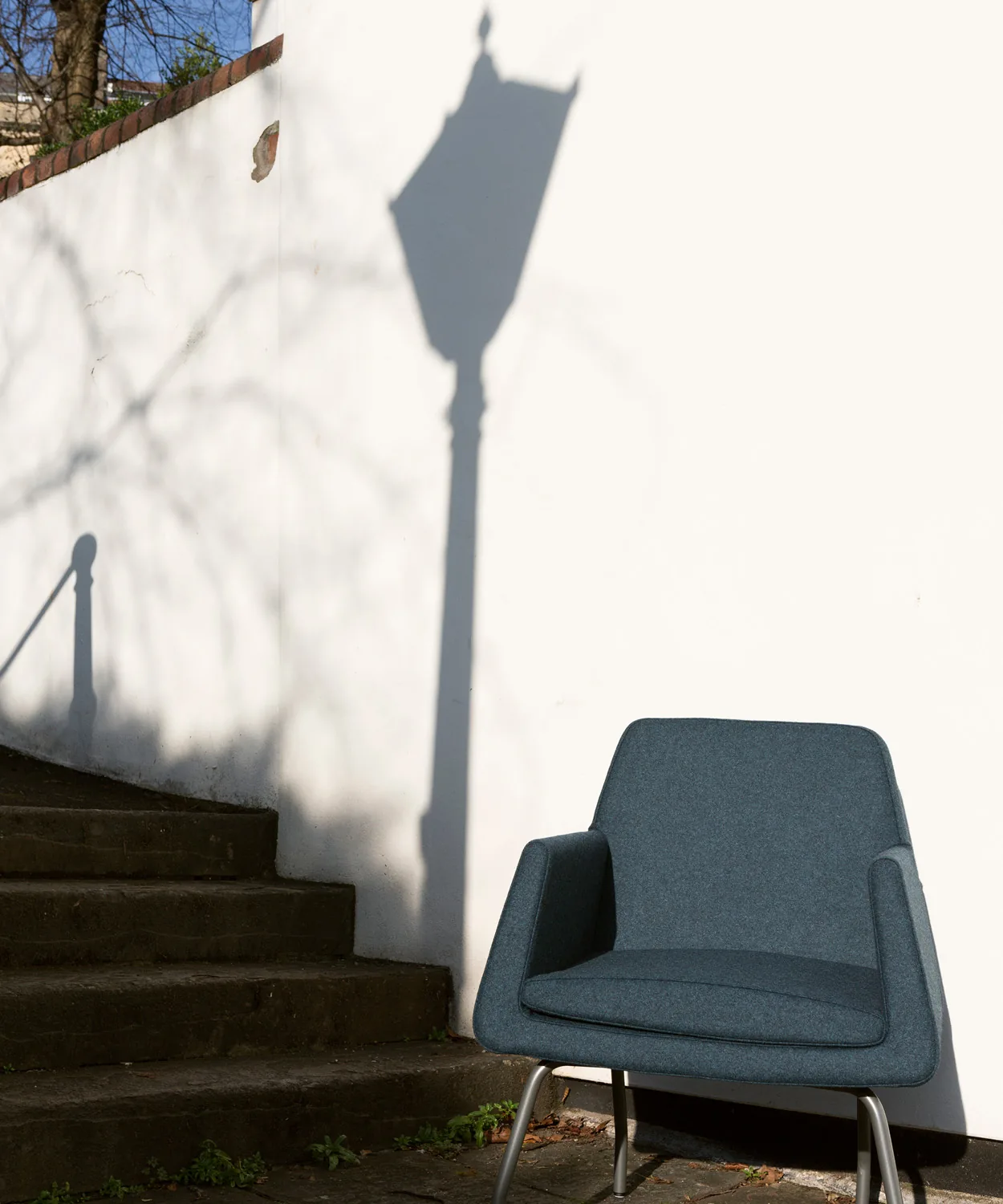
Despite all the detours, Lervik continually returns to furniture – and perhaps above all to the chair.
Over the years, he has worked with a number of Scandinavian and international manufacturers, including Johanson Design, Skandiform, Adea and the Italian company Moroso.
With Johanson Design, the relationship became far greater than individual products. During his years as creative director, Lervik played a part in an extensive transformation of the company’s identity and product range.
At the same time, he began to see how traditional manufacturing knowledge risked disappearing as generations of craftspeople left the industry.
From that insight, his own brand Tingest was born in 2013.
For the first time, he could control the entire chain himself – from the initial idea to production, communication and sales.
– It was incredibly educational. As a designer, you can otherwise hand over a drawing and then complain about the manufacturer. When you run the brand yourself, there is nobody else to blame. You have to understand pricing, logistics, packaging, warehousing, sales – everything.
In 2018, Tingest was sold to Design House Stockholm.
The decision was also a realisation of what he actually wanted to be.
Entrepreneurship was appealing, but design was more appealing.
Chapter 09
200 objects – and still not a summary
That same year, Kulturhuset in Stockholm opened Inside the Head of Alexander Lervik, a retrospective exhibition bringing together more than 200 objects from twenty years of work across approximately 900 square metres.
The title was unusually apt.
Because the exhibition did not simply show what Lervik had done. It showed how his mind seemed to work.
Furniture alongside experiments. Commercial products alongside art objects. Failures alongside successes. Technology, light, materials and ideas crossing back and forth.
In retrospect, the exhibition seems less like a final account and more like a photograph of an ongoing process.
Today, Lervik is represented in the collections of institutions including Nationalmuseum in Stockholm, Nasjonalmuseet in Oslo and the Röhsska Museum in Gothenburg. He has had solo exhibitions at institutions such as Nationalmuseum, Sven-Harry’s Art Museum and Vida Museum, and over the years his work has received a large number of Swedish and international design awards. In 2023 alone, he received ten international awards.
But when you ask him about his career, the conversation strangely rarely returns to the awards.
It returns to the projects that taught him something.
Chapter 10
Perhaps the designer’s most important word
After almost three decades in the profession, you might imagine that the working process would have become safer. That experience means you know which ideas will work.
Lervik describes almost the opposite.
Above all, experience has made him more aware of the value of not knowing.
– If I already know exactly what a product is going to look like from the beginning, I almost find the project uninteresting. Then there is nothing to discover.
Perhaps that is why his most memorable objects so often contain an element of uncertainty.
Will the chocolate really melt in the right way?
Can an MRI scan be transformed into a lamp?
Can a technical product such as a lift acquire the same emotional qualities as a piece of furniture?
Can music become another dimension in a glass object?
The questions are not rhetorical. When the projects begin, he often does not know the answer.
It is a way of working that is surprisingly close to that of an inventor.
And perhaps “designer” is therefore actually a somewhat too narrow description of Alexander Lervik. Throughout his career, he has moved between designer, artist, entrepreneur, inventor and creative strategist. Sometimes within the same project.
What binds these roles together is not the form.
It is curiosity.
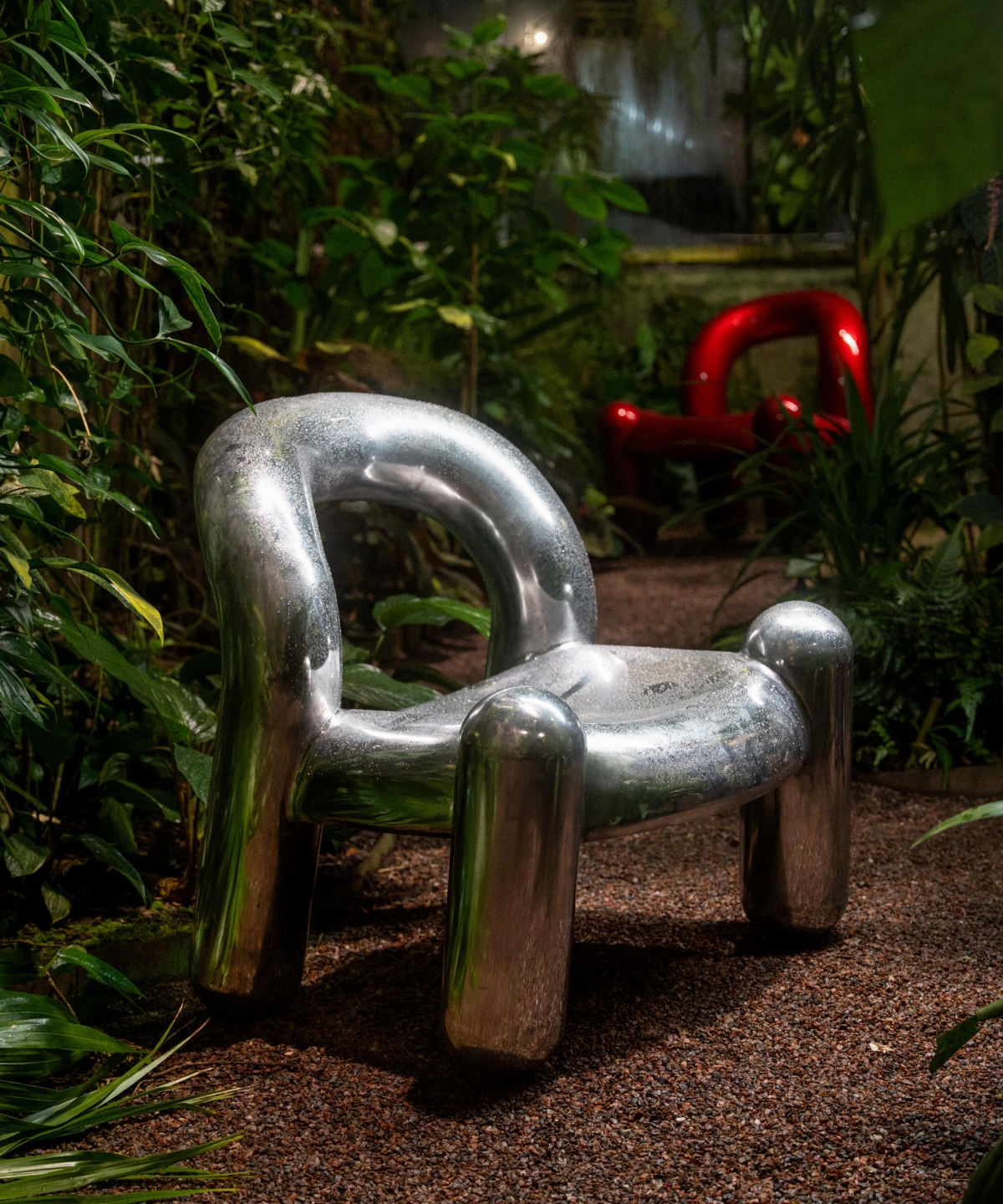
Chapter 11
Still wanting to be surprised
The design industry has changed radically since that graduation exhibition in 1998. Digitalisation has transformed the tools, 3D printing has gone from experimentation to everyday practice, and technologies that once required specialists can now be found on the desktop.
But technology itself never seems to have been Lervik’s true fascination.
He uses it when it makes an idea possible.
That is an important distinction.
MYBrain is not interesting because it is 3D-printed. It is interesting because 3D printing made it possible to hold an exact physical copy of a human brain in your hand.
Bright Handle was not about LED. It was about a door handle suddenly being able to communicate.
The Aritco project is not only about lifts. It is about what happens when you move an object from one mental category to another: from machine to furniture.
And the chocolate lamp is definitely not only about chocolate.
It is about what a lamp actually is.
Perhaps this is where the real consistency in Alexander Lervik’s work can be found.
He has spent a large part of his career questioning nouns.
Chair. Lamp. Door handle. Lift.
We think we know what they mean because we have seen them thousands of times before.
Lervik seems to regard that as the problem.
– There are already so many incredibly good products in the world. If I am going to design yet another chair or lamp, I need to feel that there is a reason. Ideally, I want to find something that makes you look again.
And perhaps that is the best summary of his career.
In 1998, a 26-year-old student stood in front of his graduation exhibition trying to work out how to make people stop in front of his particular project among hundreds of others.
Almost three decades later, Alexander Lervik is still working with the same question.
How do you make someone stop – and look again?
Chapter 12
When technology becomes touch
Lervik’s project from 2020, Tactus, once again begins with a simple question: what exists between a text message and a phone call?
The two connected lamps are designed for people living apart. Touch one and both glow red — a silent message saying, I’m thinking of you. If the other person responds by touching their lamp, both begin to pulse like a heartbeat. Hold the gesture longer and the glass gradually warms towards the temperature of human skin.
Created as part of Imaginations x12, Tactus explores loneliness and human connection through technology that is deliberately kept invisible.
Like so much of Lervik’s work, the technology is not the point. The emotion is.
Perhaps that is where his work is heading next: from making us look at familiar objects differently to asking whether an object can make us feel closer to another person.